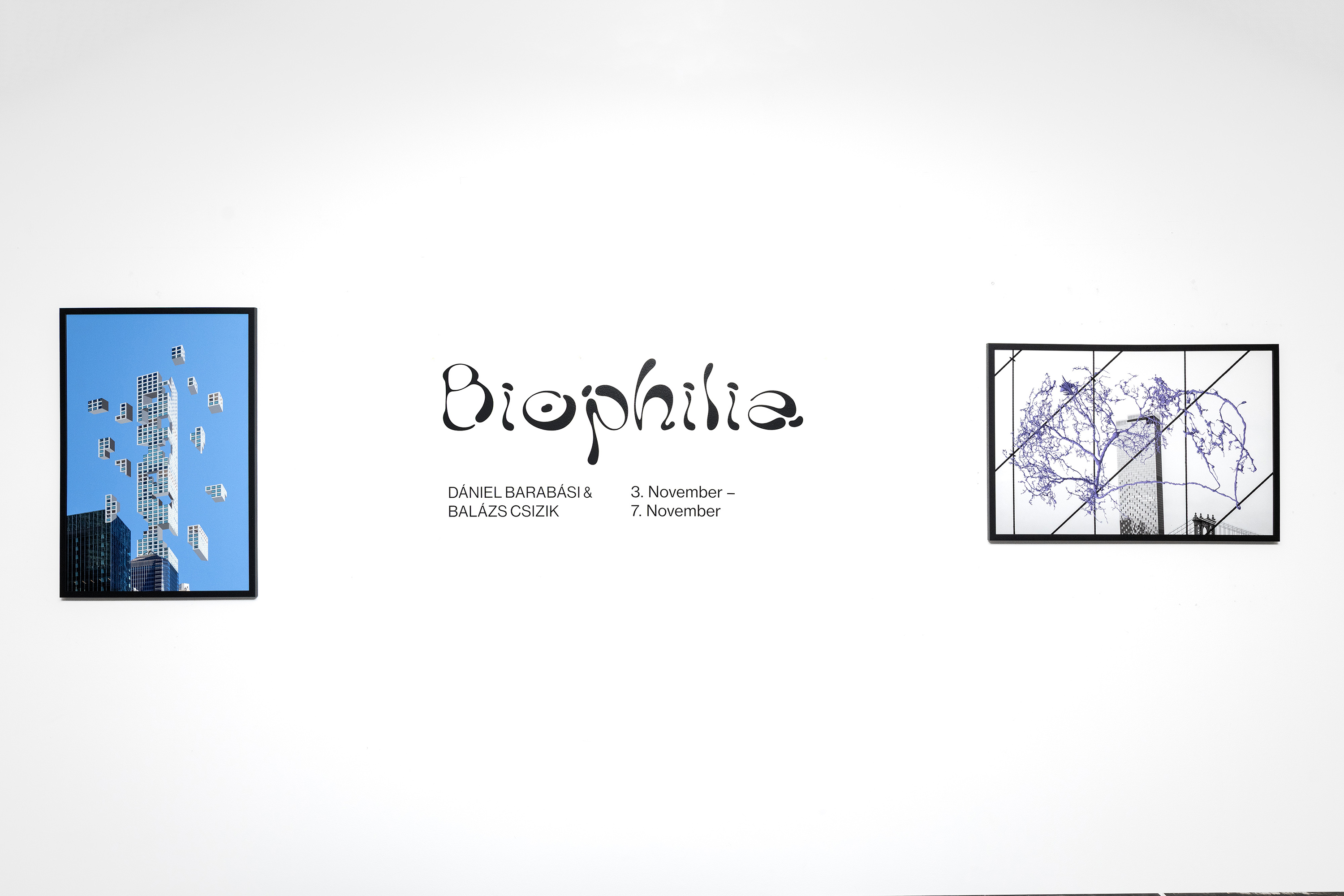
Biophilia, defined by Harvard biologist E.O. Wilson in 1984, captures humanity’s innate urge to connect — both to each other and to the nature around us. Our work builds from these same principles, examining our connections to people, places, and concepts. Barabási, a neuroscientist, animates the body’s image in the language of neural network science, while Csizik shapes the city’s lifeless image into living tissue through artistic intervention.
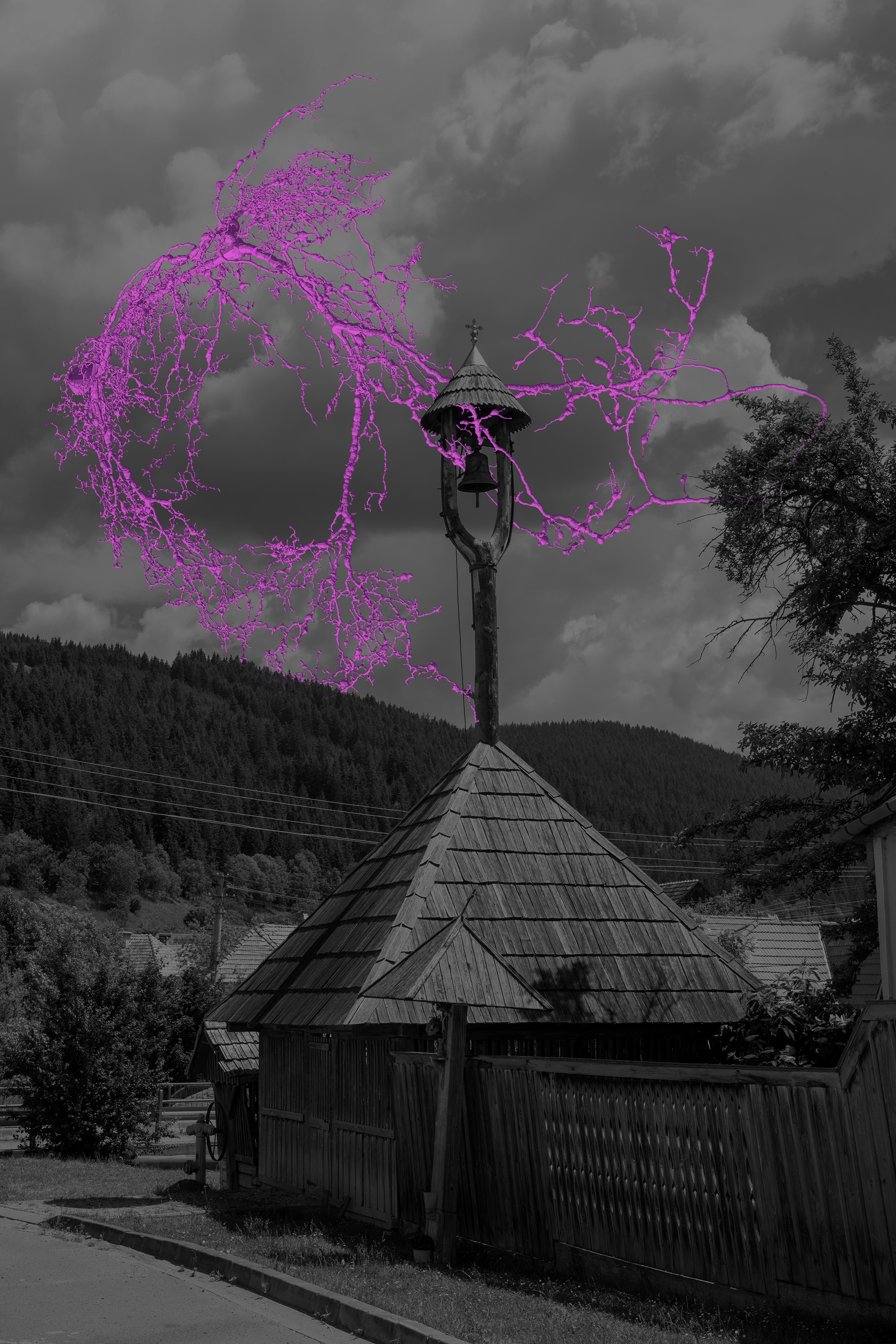
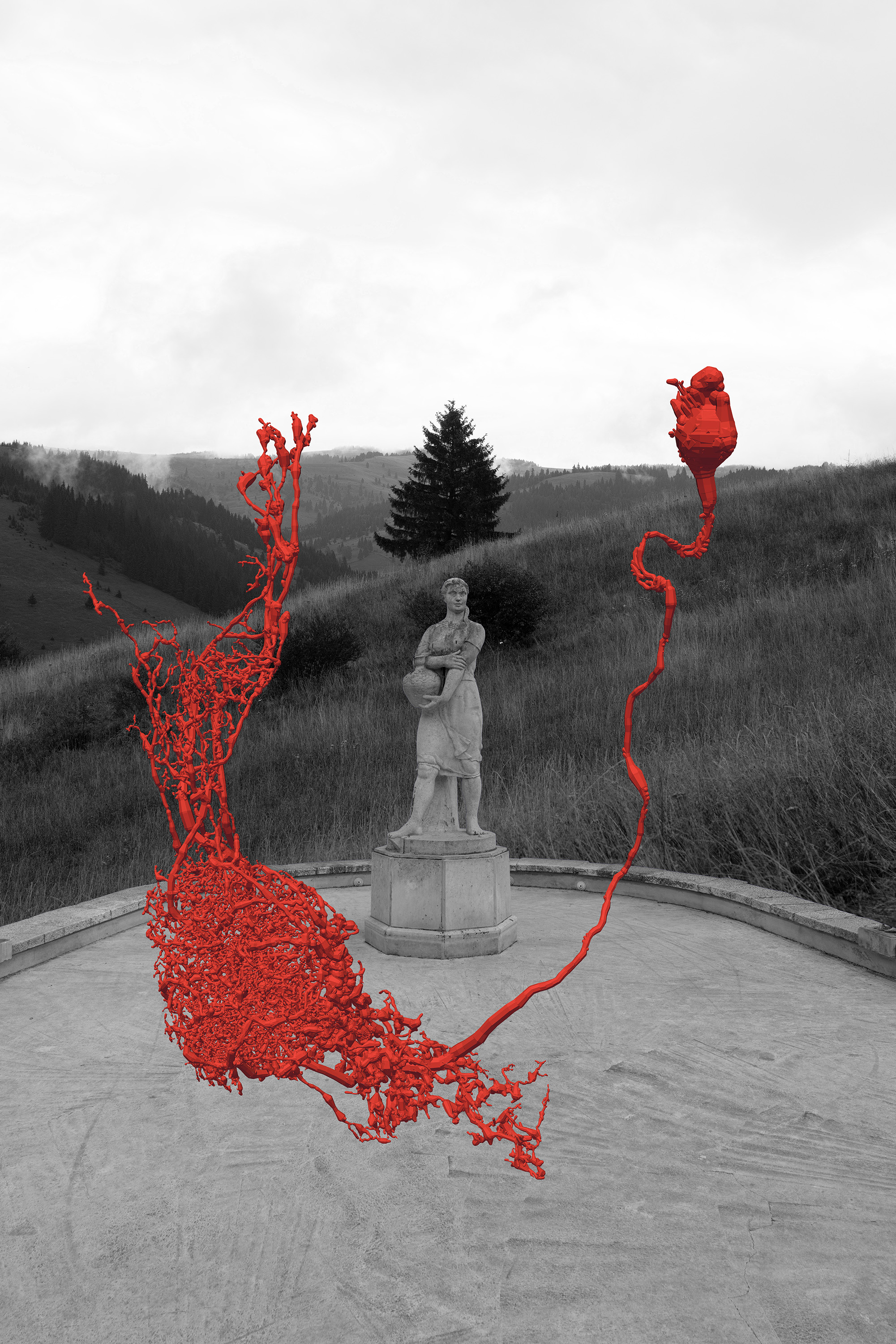
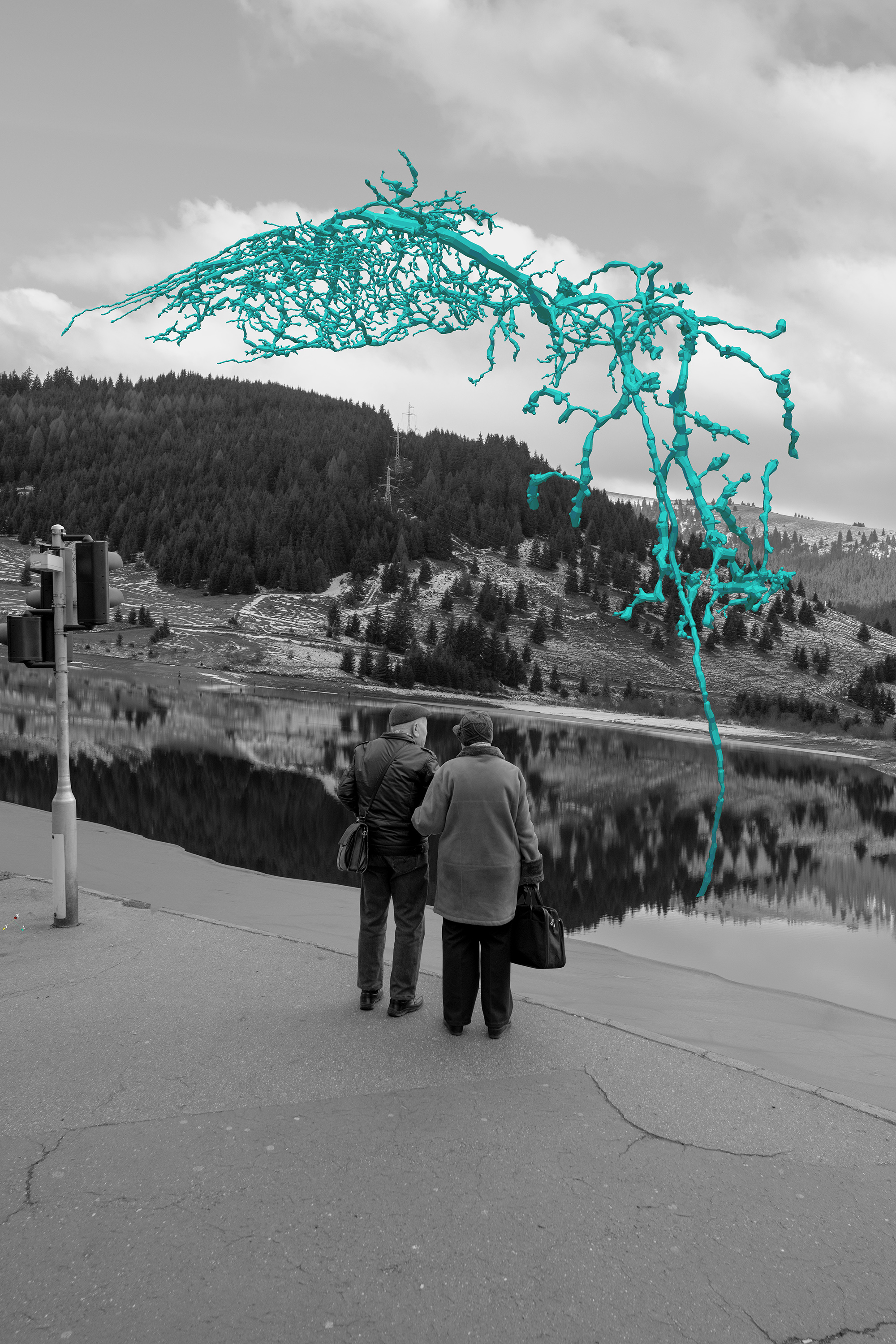
Belonging & Displacement
From Transylvania to Budapest, the artists explore the tension between belonging and displacement, rootedness and longing. An elderly couple gazes over the lake; a neuron rises to meet them, its branches simultaneously beckoning them home and marking the unbridgeable distance of the surreal.
Disease & Disorder
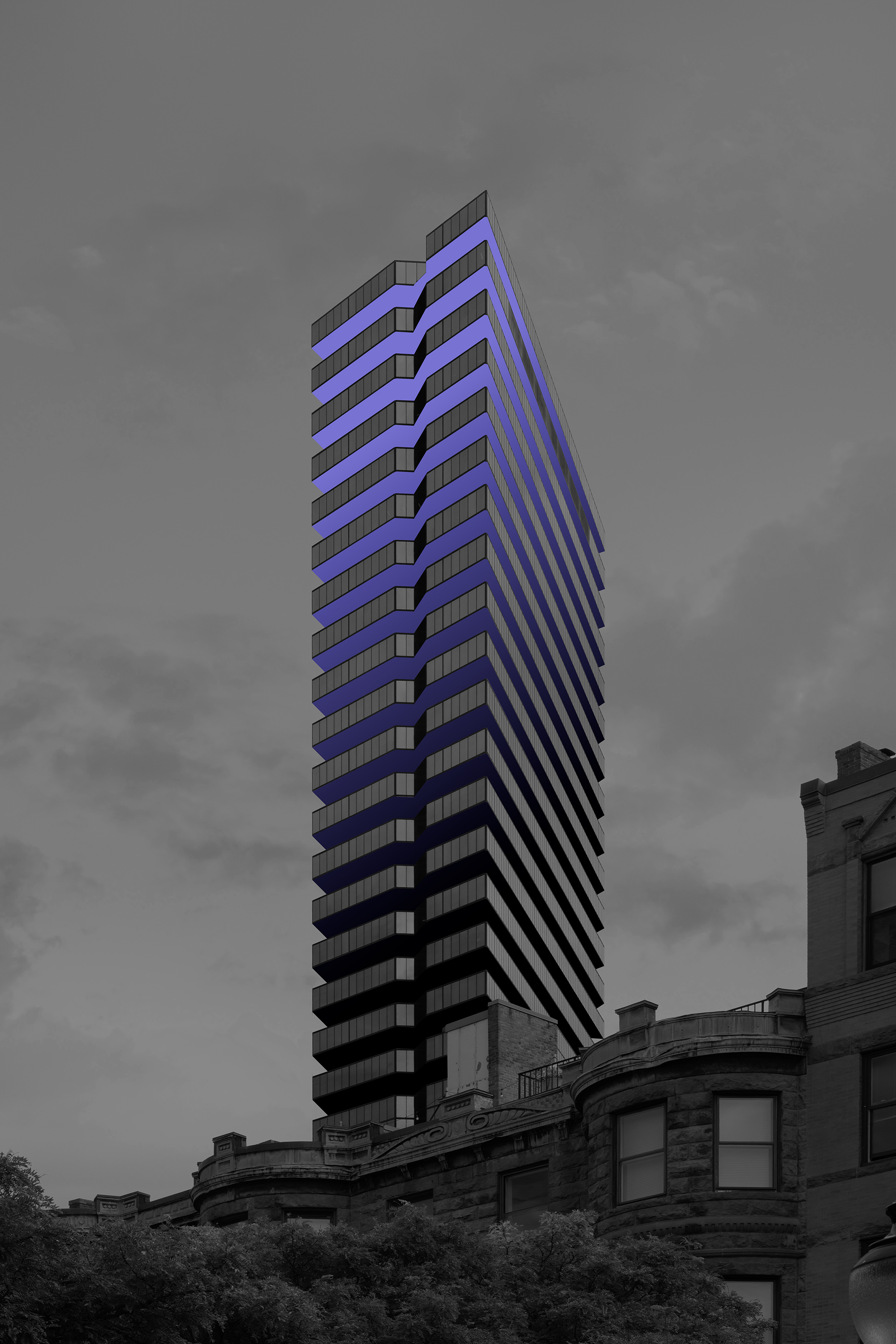
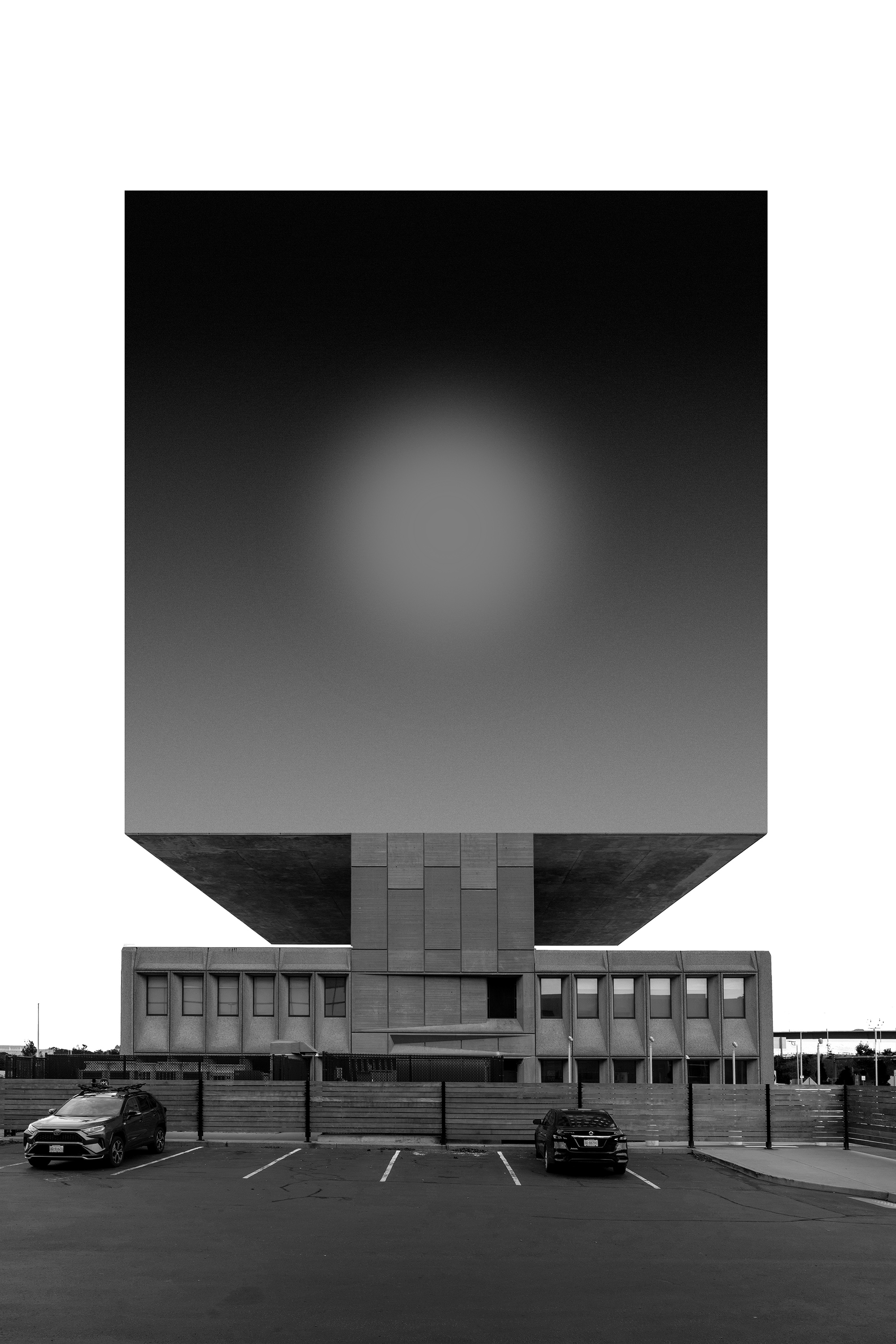
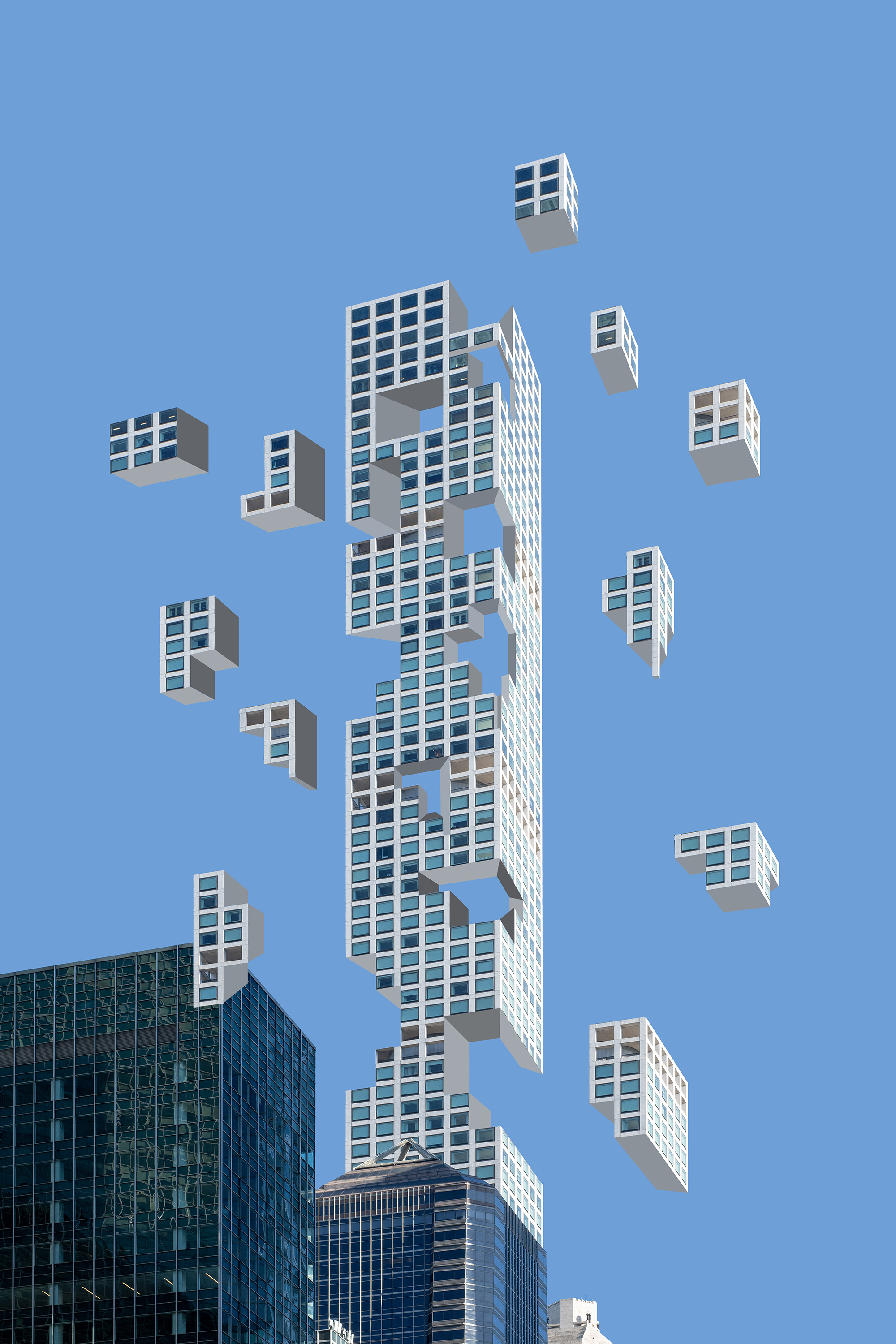
The curse of disease lies in the cooption of beneficial processes for malignant ends. Here, neural disorders are mirrored in an urban setting. A Boston high-rise trembles with Parkinson’s — its floors still functioning but no longer connected.
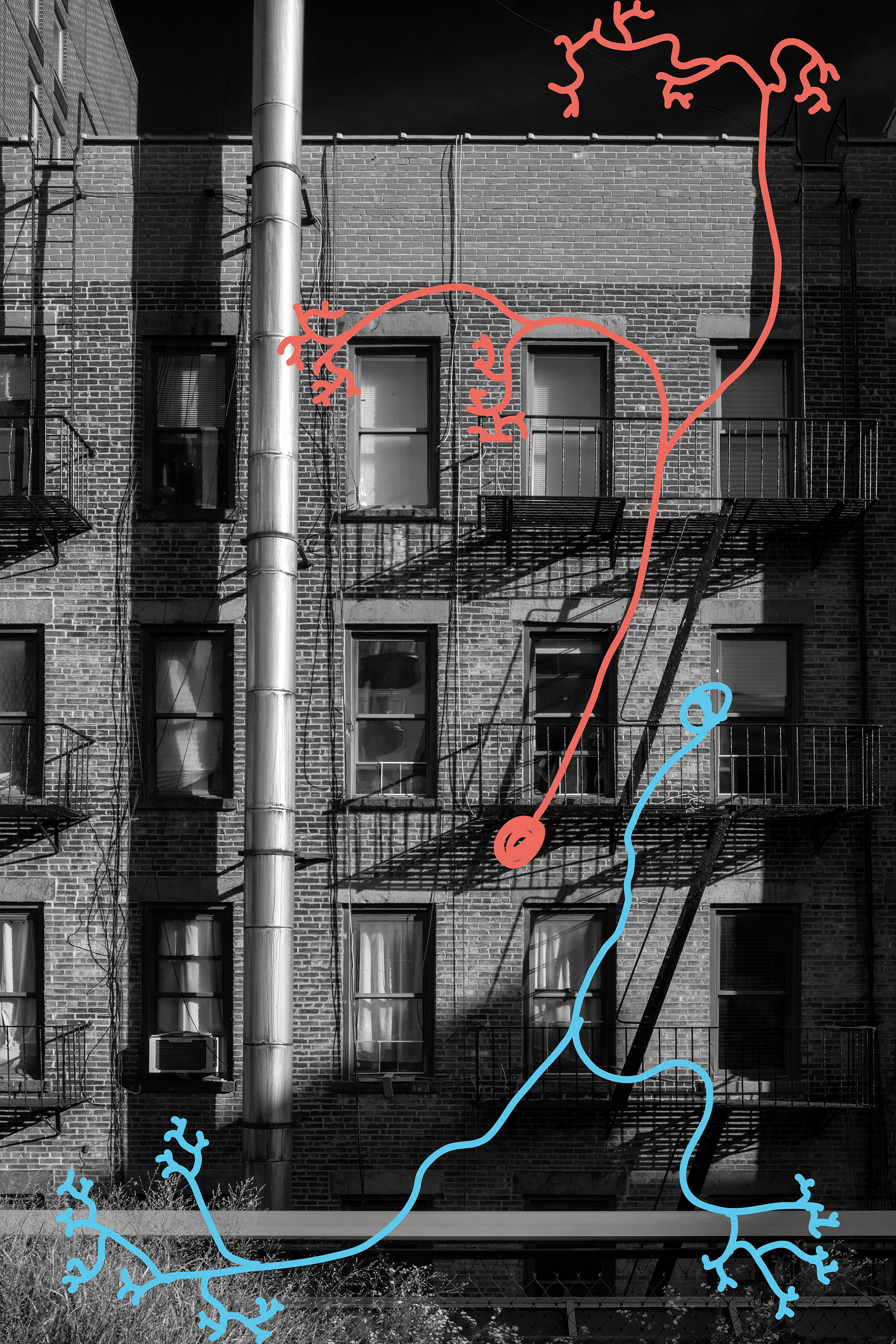
Growth & Structure
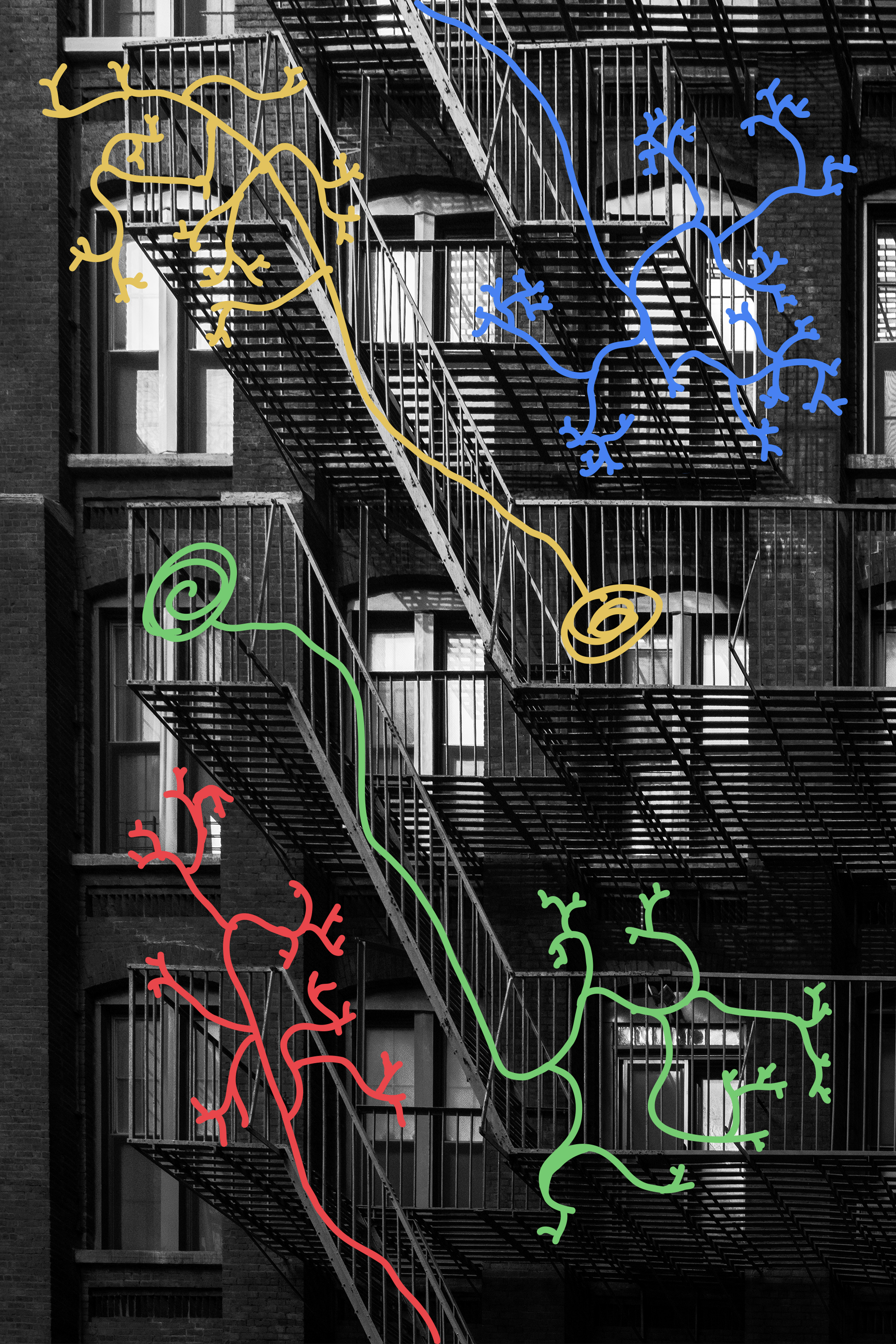
A distinct constructivist visual language depicts the formative processes that mold our minds. Bauhaus-inspired compositions pay homage to Moholy-Nagy, freezing neurodevelopment into geometric stillness. On New York fire escapes, the roles reverse: biology escapes its frame, neurons probing iron and brick as if the city itself were a substrate for growth.
Convergence
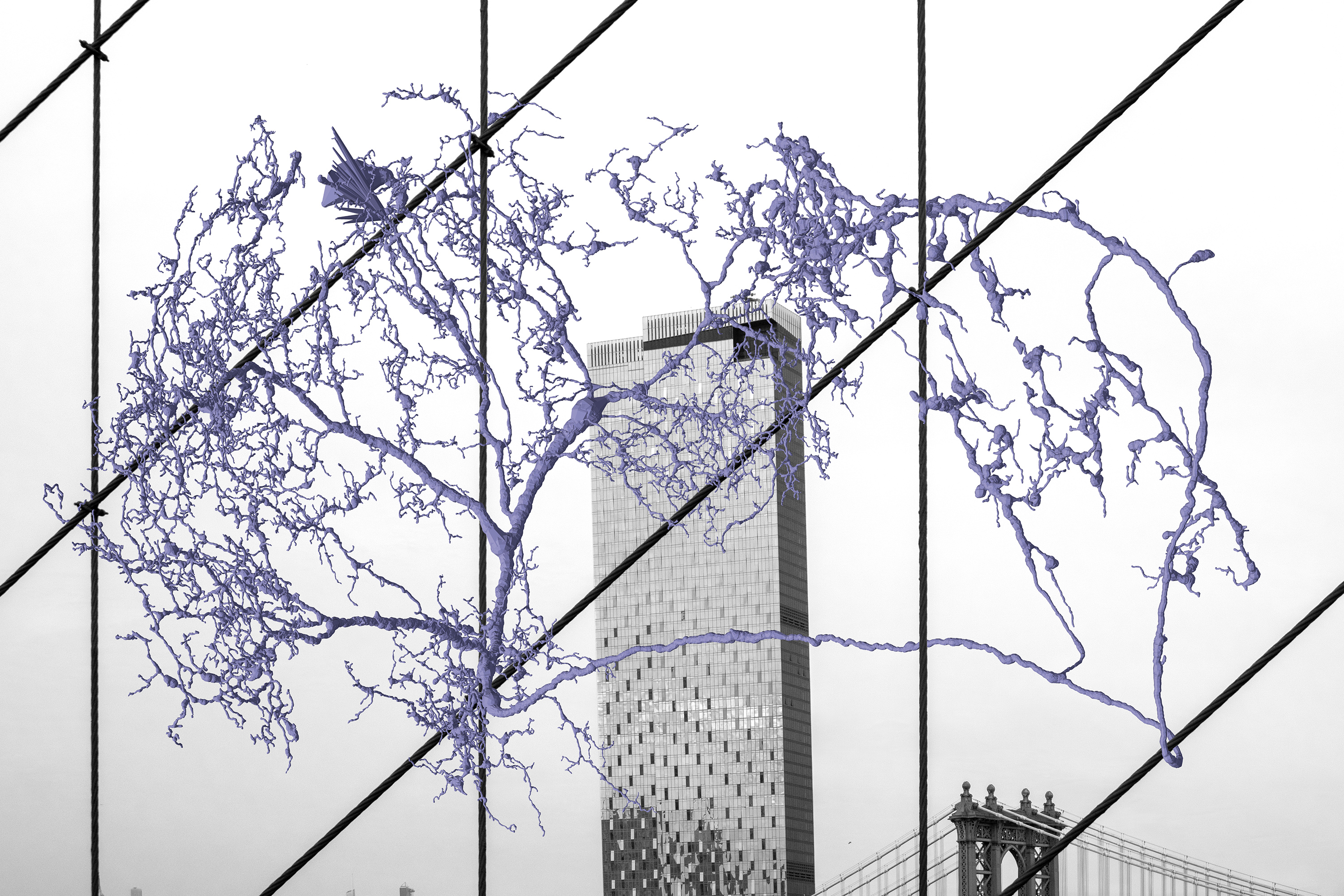
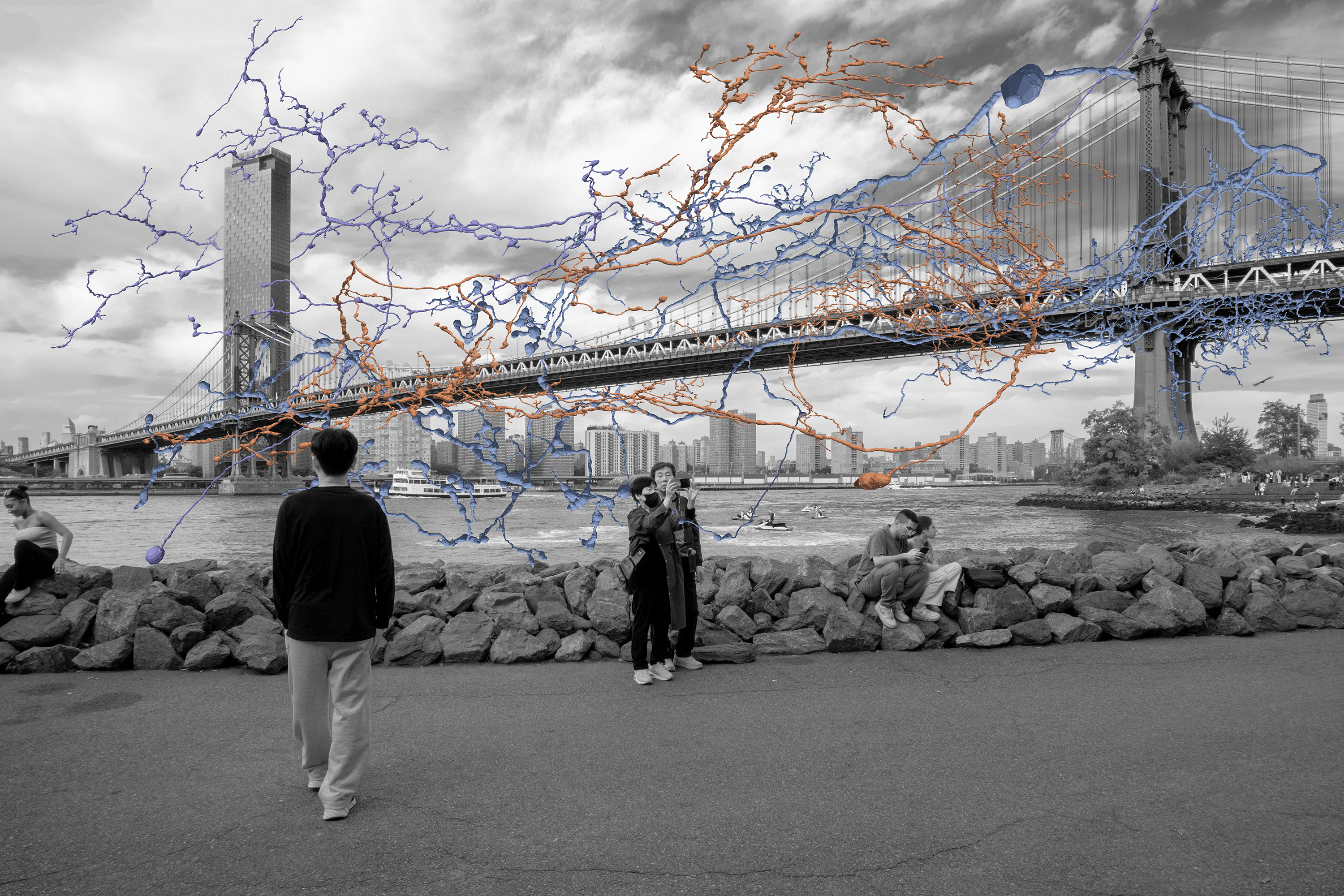
In New York, the threads converge. A neuron climbs the bridge cables, its branches organizing into the beginnings of a network, a system reaching toward connection. The city becomes what it has always been: not scaffold alone, nor organism alone, but the space where the crack opens and life moves in.